
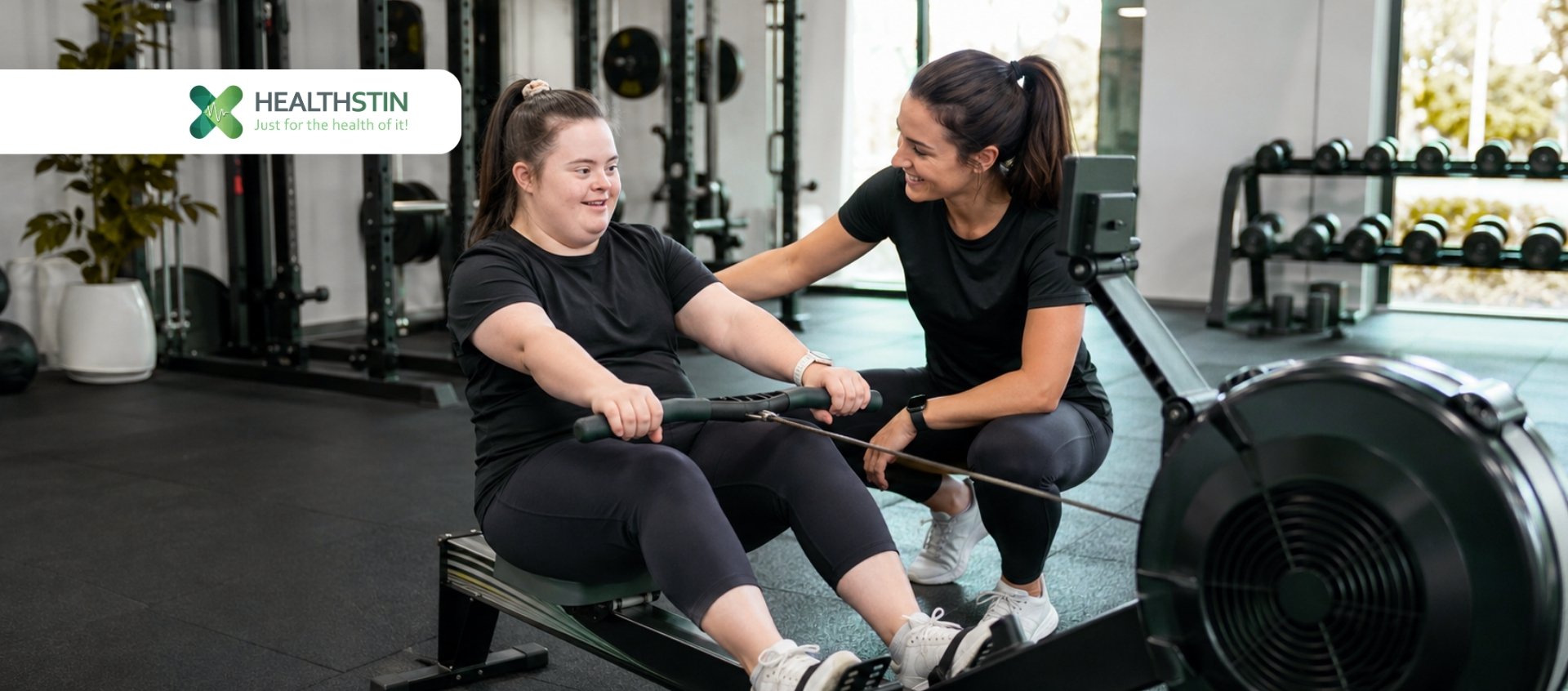
Everyday strength shows up in small moments. Standing up from a low couch. Staying steady when the bus pulls away. For many adults with Down syndrome, those moments take more effort than they should, and families are not always sure who to ask.
Strength can be built at any age. What matters is that the program suits how a person's body works and moves at a pace they can sustain.
Down Syndrome Australia estimates that between 13,000 and 15,000 people are living with Down syndrome across the country, and adults today are living longer than previous generations. That makes long-term movement support more relevant than ever. Adaptive physiotherapy in Hurstville offers a structured, low-pressure way to work on it, and the Healthstin Hurstville physiotherapy team builds each plan around the person rather than a template.
What Functional Strength Really Means
Functional strength is the strength used in daily life, not the kind measured on a gym chart. Getting off a chair without pushing up with the hands, or reaching a high shelf without wobbling.
Lower muscle tone and more flexible ligaments are common in Down syndrome, and both affect how readily muscles switch on and how stable joints feel under load. A 2025 systematic review and meta-analysis of randomised controlled trials found that strength training may improve upper and lower body strength in people with Down syndrome, while noting that more research is needed on longer-term effects. Individual results vary.
In practice, rehabilitation exercises for Down syndrome in Hurstville start simple: body weight, resistance bands, and repetition of movements already in someone's week.
Safety Comes First
Adaptive physiotherapy in Hurstville begins with assessment, not exercise. A Hurstville physiotherapist will usually look at:
- Movement and health history, including neck symptoms or conditions diagnosed by a GP
- Joint stability, balance, and how muscles respond to gentle load
- Goals described in the person's own words, or their carer's
- Communication that works: demonstration, short instructions, visual cues, or a predictable routine
One issue deserves attention. Atlantoaxial instability, extra movement between the top two bones of the neck, is more common in Down syndrome because connective tissue tends to be looser. Clinical guidance summarised by the Adult Down Syndrome Center recommends screening through history and physical examination rather than routine x- rays for people without symptoms, and notes that keeping people without symptoms away from activity carries its own costs. A Hurstville physiotherapist works within that guidance, avoids loading the neck at end range, and refers back to the GP when medical review is needed.
A Team Around the Person
Rehabilitation exercises for Down syndrome in Hurstville rarely sit on their own. Depending on goals, a plan may draw on:
- Physiotherapy for mobility, balance, and safer movement patterns
- Exercise physiology for ongoing conditioning and endurance
- Hydrotherapy in the pool at Hurstville Aquatic Leisure Centre, where water takes load off the joints
- Remedial massage for muscle tightness
Support coordinators and carers are in the loop too. The Healthstin Hurstville physiotherapy and allied health team documents progress in writing, which can be used at NDIS plan reviews. If you are not sure which service fits, call 1300 090 931 or contact the Hurstville team. No referral is required to begin.
Choosing a Hurstville Physio Clinic for Adult Disability Support
Not every Hurstville physio clinic works regularly with adults living with intellectual disability. Questions worth asking:
- Do clinicians have experience supporting adults with Down syndrome?
- Can sessions be adapted to communication style and sensory preferences?
- Will the clinic write reports that support NDIS plan reviews?
Healthstin is a Hurstville physio clinic based at Hurstville Aquatic Leisure Centre, corner of King Georges Road and Forest Road, close to transport across the St George area. Healthstin Hurstville physiotherapy runs there alongside exercise physiology, hydrotherapy, and remedial massage.
Progress here is measured in months, not weeks. Consistency matters more than intensity, and adaptive physiotherapy in Hurstville is about protecting independence over the long run rather than chasing quick results.
Ready to start? Eligible NDIS participants can book a free 30-minute consultation at no cost, or send us a referral form and a Hurstville physiotherapist will be in touch about rehabilitation exercises for Down syndrome in Hurstville that suit your goals.