
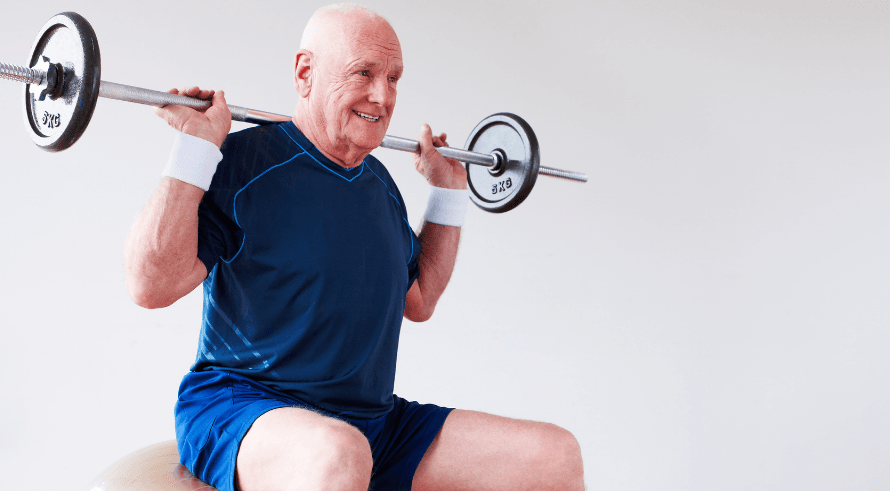
The weight room is a space for everyone, no matter your age. Whether you are 55, 75, or well into your 90s, it is never too late to begin getting stronger. For older adults, strength training is one of the most powerful tools available to improve independence, vitality, and overall quality of life.
The Science of Staying Capable
Starting in our 30s, we naturally begin losing muscle mass (a process called sarcopenia) as well as bone density, known as osteopenia. Without intervention, everyday tasks become harder and more dangerous. The good news? Strength training hits the brakes on this decline. It tells your body to build denser bones, fortify joints, and preserve vital muscle. You don’t need to lift extremely heavy weights; the goal is "functional strength" training for the movements you rely on every day.
The Longevity Starter Pack: 6 Essential Movements
To build a routine that prioritises joint health and long-term mobility, focus on these six exercises:
- Goblet Squats (The Sit-to-Stand Preserver): Holding a weight at chest height builds core and leg strength for getting out of chairs easily.
- Reverse Lunges (The Fall Prevention Specialist): Training one leg at a time challenges your balance and drastically reduces your risk of stumbling.
- Romanian Deadlifts (The Lower Back Protector): Hinging safely at the hips strengthens the exact muscles needed to counteract chronic back pain.
- Farmer’s Carries (The Grip & Posture Builder): Walking with heavy dumbbells builds core stability and vital grip strength.
- The Dead Hang (The Shoulder Decompressor): Hanging from a bar for 30–60 seconds decompresses your spine and shoulder joints.
- Dumbbell Rows (The Posture Corrector): Pulling exercises strengthen the upper back, directly counteracting a hunched posture.
Don't Know Where to Start? The Hurstville Team is Here
Walking onto the gym floor to try these movements alone can feel daunting. We know that stepping into the weight room for the first time can make you feel completely out of place.
However, Dean, Health Club Manager at Hurstville, reassures members that they are not alone. "Everyone starts somewhere, and you don’t need to be fit or experienced before you walk through the door," he explains. Working with a good coach ensures you will be shown exactly what to do, receive help with your technique, and feel comfortable every step of the way.
Building Strength Around Stiff Joints
If you are managing a bad knee or a stiff back, you might assume the weight room isn't for you. On the contrary, strength training is a great way to build strength and support everyday movement—it just needs to be tailored to you.
Dean advises always letting your PT or coach know about any injuries, pain, or limitations so exercises can be safely modified to suit your needs. "If you’re unsure where to start," Dean notes, "a 1-on-1 PT session is a fantastic way to get personalised guidance."
Group Fitness on Your Terms
If you are interested in group fitness classes but worry about keeping up, you can put those fears to rest. You don’t have to be the strongest or fittest person in the room to participate.
Classes such as Body Pump and FX30 can be easily adapted to different fitness levels. The instructors at Hurstville are there to help you work at your own pace, encouraging you to focus on your own progress, not everyone else’s.
Managing Muscle Soreness
Many beginners worry that lifting weights will leave them too sore to manage normal daily activities. While you may experience some muscle soreness when you’re brand new to strength training, it shouldn’t leave you unable to function normally.
Starting gradually, using appropriate weights, and allowing your body time to recover can make a big difference. As Dean points out, your coach can help you find the right starting point so you leave feeling energised, not exhausted.
Getting Started Today
You don't need to be sore for days to reap the benefits. Start incredibly light and focus on mastering the technique by yourself, in a class by booking in for our Group Fitness timetable here, or with a trainer at Hurstville.
The goal isn't to see how much weight you can move today, it's to ensure you can still move exactly how you want years from now. You are never too late to start!