
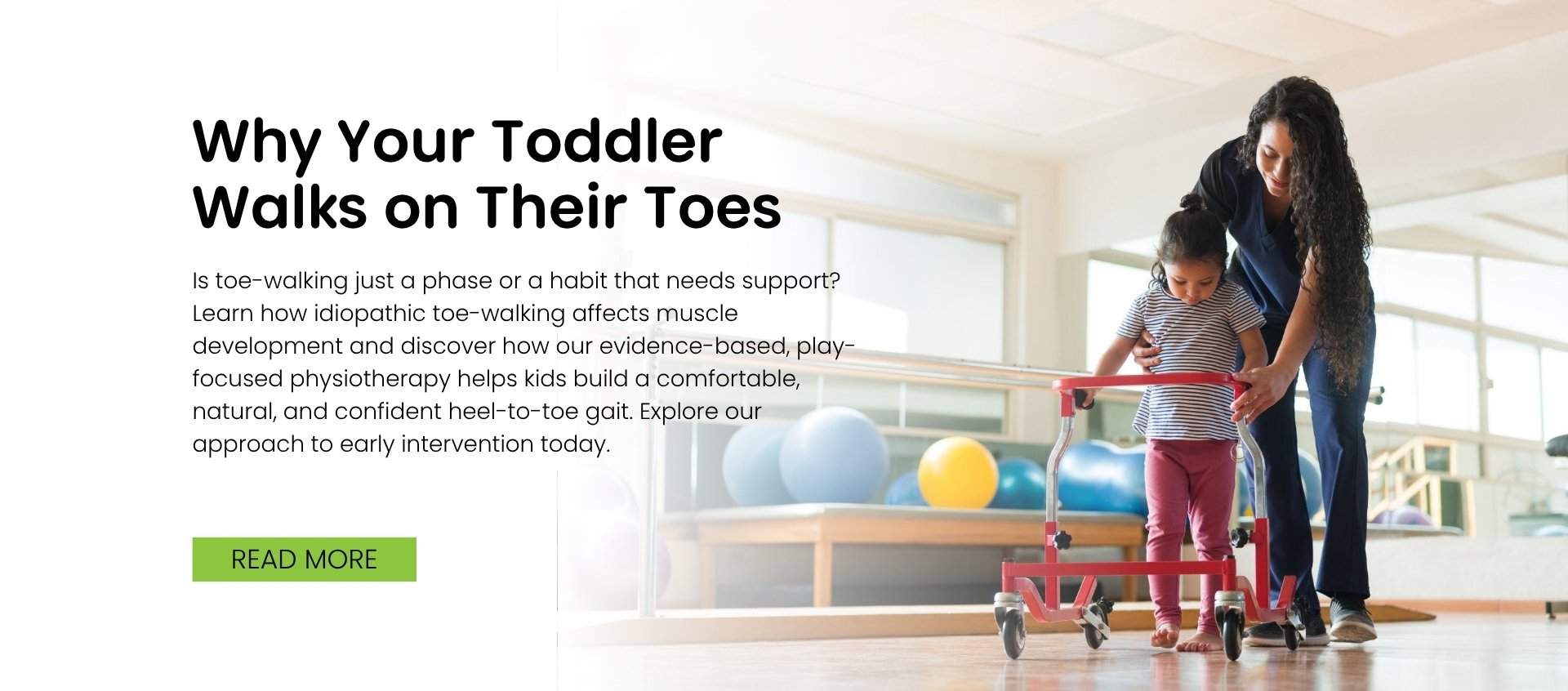
When toddlers take their first steps, their gaits are beautifully unpredictable. Watching a little one wobble, balance, and occasionally scurry around on their tip-toes is completely normal during early development.
However, if a child continues to walk primarily on the balls of their feet past the age of two or three, it shifts from a transient phase into a clinical pattern known as idiopathic toe-walking (ITW). The word "idiopathic" means that the behavioural pattern occurs without an identifiable underlying medical or structural cause.
For families, seeing a child consistently toe-walk can cause concern. Left unaddressed, this walking pattern can alter muscle development, joint mechanics, and a child’s playground confidence.
At Healthstin Hurstville, our university-qualified physiotherapists utilise an evidence-based approach to support children working toward a natural, heel-to-toe gait pattern, supporting their long-term musculoskeletal health. Proactively seeking a targeted framework like idiopathic toe walking physiotherapy can prevent minor developmental habits from becoming fixed physical restrictions.
Unpacking Idiopathic Toe-Walking
Before formulating a management plan, it is critical to understand what ITW is—and what it isn't. Idiopathic toe-walking is fundamentally a diagnosis of exclusion. This means a clinician will comprehensively evaluate a child to rule out known neurological, orthopaedic, or sensory conditions, such as cerebral palsy, muscular dystrophy, or autism spectrum disorders. When a child doesn't have any underlying medical conditions but still prefers to walk on their toes, it is called Idiopathic Toe Walking (or ITW for short).
For many kids, it starts out as just a habit or because they prefer how the floor feels on their toes. But over time, this can actually change how the muscles and tendons in their legs grow.
Using targeted physiotherapy for toe walking early on helps gently break these habits or sensory preferences before the leg muscles tighten up permanently.
The longer a child walks on their tiptoes, the more their bodies adapt to that position. This creates a tough cycle where trying to walk flat-footed actually begins to feel uncomfortable or physically difficult for them to maintain.
The Physical Consequences of Unmanaged ITW
The human foot and ankle are built to act like natural shock absorbers, soaking up the impact every time your heel hits the ground and spreading your weight evenly.
When a child constantly walks on their toes, they skip this natural cushion entirely. Instead of being safely absorbed, that hard, repetitive impact travels straight up their legs, putting extra strain on their shins, knees, and lower back.
Over time, keeping the heels elevated leads to significant muscle imbalances. The calf muscles—specifically the gastrocnemius and soleus—along with the Achilles tendon, spend prolonged periods in a shortened state. This causes structural tightening, which physically restricts the ankle's ability to flex upward (a movement known as dorsiflexion).
Simultaneously, the muscles on the front of the shin become elongated and weak from disuse.
| Muscle Group | Physical Condition | Impact on Daily Activity |
|---|---|---|
| Calf Muscles & Achilles | Structurally tight / shortened | Limits ankle flexibility; prevents the heel from comfortably touching the ground. |
| Shin Muscles (Anterior Tibialis) |
Weak / elongated | Reduces the child’s ability to clear their toes when lifting the foot, increasing trip risks. |
| Core & Gluteal Muscles | Under-activated | Causes the pelvis to tilt forward, creating an exaggerated lower back curve to maintain balance. |
When the ankle cannot bend naturally, the rest of the body has to work overtime to make up for it, often by locking the knees back or tilting the hips forward.
This extra strain can cause your child to tire out quickly, experience sore feet, or seem a bit clumsy during schoolyard games. Setting up a friendly, structured plan for idiopathic toe walking physiotherapy focuses on stretching and strengthening these exact leg muscles, helping your child find a much more balanced and natural posture.
Evidence-Based Physiotherapy at Healthstin Hurstville
At Healthstin Hurstville, managing ITW is never about forcing a child into rigid, frustrating movement patterns. Instead, our clinical team formulates playful, evidence-based interventions that target muscle imbalances while supporting the nervous system's motor pathways. Utilising focused physiotherapy for toe walking methodologies confirms that clinical objectives are achieved through engaging, age-appropriate activities.
A comprehensive, tailored treatment plan typically focuses on three core areas:
Targeted Musculoskeletal Lengthening: If a child has developed structural tightness in their calves, we utilise gentle stretching techniques and active, game-based movements to support ankle range of motion. This might involve playful calf stretches disguised as "animal crawls" or standing on specialised inclined wedges during fun coordination games.
Lower Limb Strengthening: To support the child to transition away from toe-walking, the muscles on the front of the shin must be strengthened. Clinicians engage children in activities like picking up small marbles with their toes, walking on their heels like penguins, or performing fun balancing challenges on unstable foam mats.
Gait Retraining and Sensory Integration: Retraining walking habits requires consistent, positive feedback. Our clinic utilises visual cues (like brightly coloured floor footprints) and auditory feedback (listening for a loud "stomp" of the heel) to support children to develop a conscious awareness of how their feet meet the ground.
A Collaborative, Family-Centered Approach
A critical component of successful therapy is what happens outside the clinic walls. Children spend only a fraction of their week in a physiotherapy session, meaning home routines are where long-term habits are truly rewritten. Incorporating the principles of idiopathic toe walking physiotherapy into daily play confirms that the child receives the consistent repetition required to adapt.
The team at Healthstin Hurstville focuses heavily on coaching parents and carers. We translate clinical exercises into seamless home activities that can be integrated into regular playtime or trips to local parks like Kempt Field. Furthermore, when structural alignment requires extra support, our physiotherapists collaborate closely with local podiatrists to evaluate whether orthotics (custom shoe inserts) or temporary footwear modifications are appropriate to support muscle length.
Getting help early makes all the difference. Choosing to start friendly, targeted physiotherapy for toe walking before your child's leg muscles and joints tighten up makes the whole process much easier and smoother. It gives your child the strength, balance, and confidence they need to walk and play comfortably.
Contact Healthstin Today
Ready to help your child overcome idiopathic toe walking? The friendly, registered NDIS team at Healthstin is here to help. We bring hands-on, active therapy straight to you—whether that is in your own home or out in the Hurstville community. Call 1300 090 931 to talk with us and take the first step toward a more manageable, balanced routine. Or click on the link below:
No-Obligation Free Consultation | Healthstin Allied Health